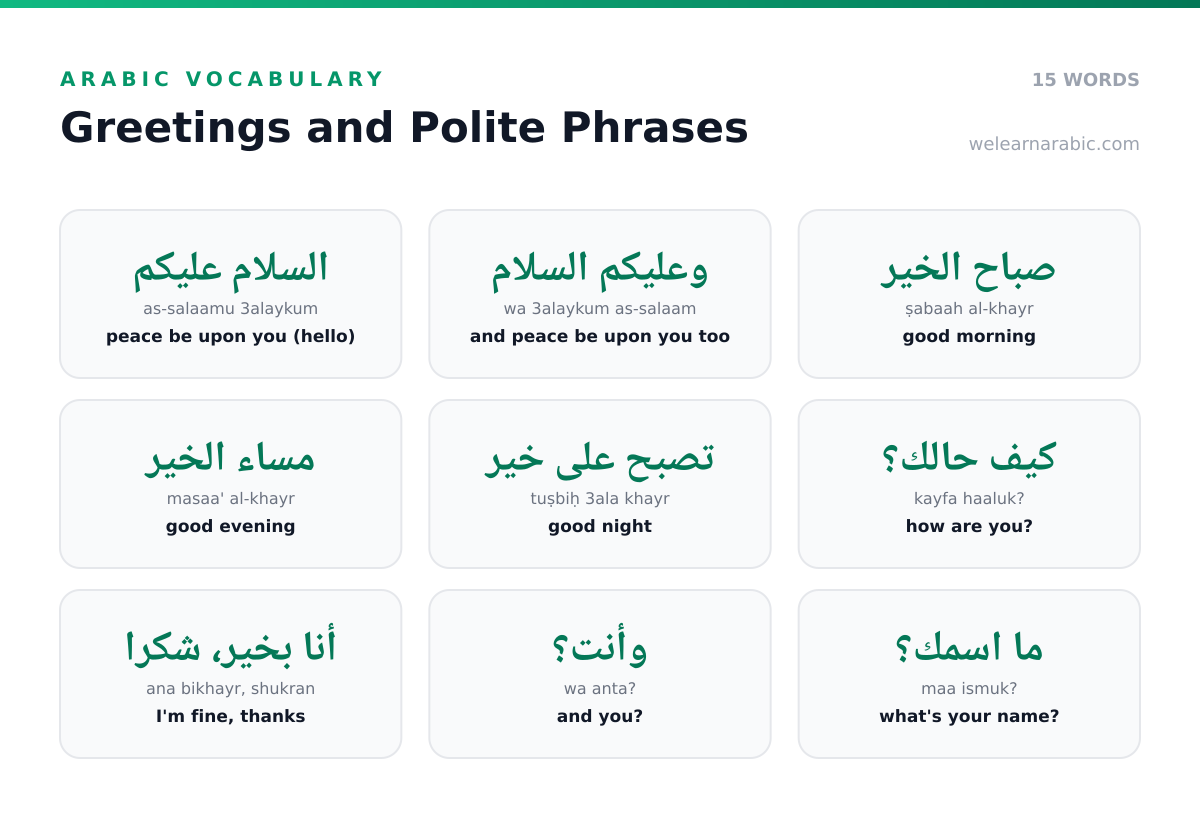
These greetings are the building blocks of every Arabic conversation. Mastering them helps you make a good first impression and move through social situations with confidence. Tap any phrase above to hear it.
The universal greeting
The most important Arabic greeting is السلام عليكم (as-salaamu 3alaykum), “peace be upon you.” It works across the Arab world regardless of religion or setting. The proper response is وعليكم السلام (wa 3alaykum as-salaam), “and peace be upon you too.” This exchange reflects the deep cultural value placed on peace and well-wishing.
Time-based greetings
صباح الخير (ṣabaah al-khayr) means “good morning” and is used from dawn until around noon. مساء الخير (masaa’ al-khayr) means “good evening” and is used from sunset onward. Both follow the pattern [time period] + الخير (al-khayr, “the good”) — literally wishing someone “a morning of goodness.”
For goodnight, تصبح على خير (tuṣbiḥ 3ala khayr) literally means “may you wake upon goodness.” The reply is وأنت بخير (wa anta bi-khayr), “and may you too be well.”
The art of asking “how are you?”
كيف حالك؟ (kayfa haaluk?) is the standard “how are you?” The most common response is الحمد لله (al-ḥamdu lillaah, “praise God”), which signals that things are going well. You can also say بخير (bikhayr, “I’m fine”). The polite exchange continues with وأنت؟ (wa anta?, “and you?”), showing interest in the other person.
Introducing yourself
ما اسمك؟ (maa ismuk?) means “what’s your name?” The reply is اسمي (ismee) followed by your name — for example, اسمي أحمد (ismee Aḥmad). After introducing yourself, تشرفنا (tasharrafnaa) means “nice to meet you,” a warm and respectful way to acknowledge a new acquaintance.
Farewells
مع السلامة (ma3a as-salaama) is the most common goodbye, literally “with peace.” إلى اللقاء (ilaa al-liqaa’) means “until we meet again.” عفوا (3afwan) is versatile — it means both “you’re welcome” (in reply to thanks) and “excuse me” (to get attention or apologize).
Example dialogues
Basic introduction:
- السلام عليكم — “Peace be upon you.”
- وعليكم السلام! كيف حالك؟ — “And peace be upon you! How are you?”
- الحمد لله، وأنت؟ — “Praise God, and you?”
- بخير، شكرا — “I’m fine, thank you.”
- ما اسمك؟ — “What’s your name?”
- اسمي سارة. تشرفنا! — “My name is Sarah. Nice to meet you!”
- تشرفت! مع السلامة — “The pleasure is mine! Goodbye.”
Evening greeting:
- مساء الخير — “Good evening.”
- مساء النور! كيف حالك؟ — “Good evening (light)! How are you?”
- الحمد لله — “Praise God (I’m well).”
Cultural note
Greetings in Arabic-speaking cultures are often extended and heartfelt. It is common to ask about family, health, and work as part of the greeting ritual, and rushing through it can seem rude. The phrase الحمد لله is used far beyond religious contexts — it is the standard way to say that things are going well in any part of life.
Practice
What is the reply to 'السلام عليكم'?
hint: It means 'and peace be upon you too'
How do you say 'good morning' in Arabic?
hint: It literally means 'morning of goodness'
What does 'الحمد لله' mean?
hint: It is the standard response to 'how are you?'
Match each pair — start with Arabic (left)
0 / 8Arabic
English
← Select an Arabic word, then tap its meaning →
Want to hear these greetings in full dialogues? Try the Arabic greetings lesson.
Share what you know
0 notes from learners — add an example, a tip, or a correction
Know something that would help?
Add an example, a tip, or a correction for other learners.
Sign in to contribute